Signs your restaurant's grease trap needs cleaning
What odours, slow drains and backups can mean, and how to decide the next step.
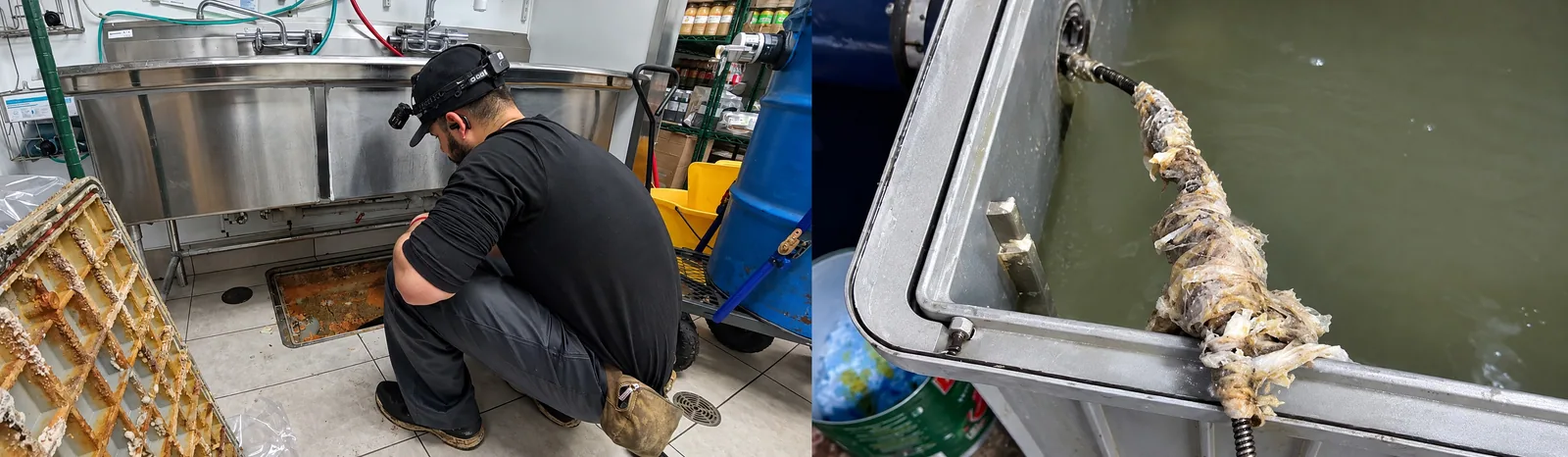
Grease trap cleaning and pipe snaking are different services that solve different problems. Grease trap cleaning removes the grease, solids and wastewater that have collected inside the trap. Pipe snaking clears a blockage in a drain line. One does not automatically do the other. A restaurant may need trap cleaning, drain clearing, or both, depending on where the problem is.
A grease trap or interceptor is designed to capture fats, oils, grease and solids before the wastewater continues down the drain line. Cleaning removes the accumulated material from the trap, cleans accessible internal components, checks visible condition and reassembles the unit.
The work addresses what is inside the trap. It does not normally clean the inside of the downstream pipe, clear a blockage farther along the line, or repair a damaged baffle, lid or fitting. The scope depends on the trap and access; the provider should confirm it before work begins.
Drain snaking, also called cabling or rodding, uses a flexible cable or auger fed into a drain or cleanout to break through or pull back a blockage. It is a drain-line service. The technician may use a cable machine, a different head, or another method after assessing the line.
Snaking can restore flow through a blockage, but it may not remove all grease or scale from the pipe walls, and it does not clean the grease trap. A plumber may recommend hydro-jetting, camera inspection or repair if the line condition calls for it. The right method depends on the pipe, the blockage and the risk of damage.
| Service | Main purpose | Where the work happens | Symptoms it may help | What it does not do |
|---|---|---|---|---|
| Grease trap cleaning | Remove accumulated grease, solids and wastewater from the trap. | Inside the trap and its accessible components. | Odours, slow drainage or backups when the trap is full; visible grease around the trap. | It does not clear a downstream pipe blockage, repair a damaged component or replace plumbing. |
| Pipe snaking or drain clearing | Open a blocked drain line. | Inside the drain pipe or cleanout. | Recurring slow drains, backups, gurgling or multiple fixtures affected by one blockage. | It does not remove the contents of the grease trap, clean the pipe walls completely or fix a damaged or collapsed pipe. |
Inside the trap, grease floats and solids settle. Over time, the trap fills and needs cleaning. In the pipe, grease that passes the trap can cool and stick to the walls, food solids can lodge, and scale, roots or a damaged pipe can narrow or block the line.
The symptoms can look similar: slow drainage, gurgling, odours and backups. The location of the problem is different. A full trap may cause slow drainage because wastewater has less room to separate; a blocked pipe may cause slow drainage even when the trap is clean.
These signs do not prove the trap is the only problem. For a closer look, read signs your restaurant's grease trap needs cleaning.
If sewage is backing up, stop using the affected fixtures and call a licensed plumber. Avoid contact with wastewater and keep staff away from the area.
The trap is one part of the drainage system. Wastewater leaves the trap through an outlet and travels through a pipe. Grease, solids, scale or roots can restrict that pipe. Cleaning the trap removes material from the trap, but it does not send a cable or jetter through the downstream line. If the blockage is past the trap, the trap can be spotless and the drain will still be slow.
Conversely, snaking the line does not remove the grease and solids sitting in the trap. A trap that is full can continue to cause odours or solids carryover even after the pipe is opened.
Grease Shields provides commercial grease trap cleaning and maintenance in St. John's and across the Island of Newfoundland. Pipe snaking, drain-line repair and plumbing work are outside the services described on this site. If the problem is in the pipe, contact a licensed plumber or drain-clearing professional.
If the trap has been cleaned and the symptoms continue, say so when you call; that helps the plumber focus on the line. If the backup involves sewage, stop using the affected fixtures and treat it as an urgent plumbing issue.
Good kitchen practices reduce the load on both the trap and the line:
Do not rely on chemical drain products to replace cleaning or drain clearing. They do not remove accumulated solids, and some products can damage pipes or create hazards. The right schedule depends on the kitchen, the trap and local requirements. A provider who sees the trap and the line history can help set it.
The City of Calgary's grease trap guide and the U.S. EPA's food-service FOG guidance both emphasize keeping grease and solids out of the drain and maintaining the trap on a suitable schedule.
Sometimes, if the trap is full and the line is clear. It will not fix a blockage farther down the pipe. If the drain is still slow after cleaning, the next step is a plumbing assessment.
A cable can damage a fragile or already-damaged pipe if it is used incorrectly. A qualified drain-clearing professional should assess the line and choose the method. Camera inspection may be needed.
Not always. The trap and the line are separate. A site assessment determines whether one or both are needed. If both are due, they can sometimes be scheduled close together, but they are different scopes.
If you are in St. John's or elsewhere on the Island of Newfoundland and your trap is due for cleaning, Grease Shields can confirm the scope and schedule. See the grease trap cleaning and maintenance service or request a quote. For maintenance planning, read our grease trap maintenance guide. If the line is blocked, contact a licensed plumber.