What Is Included in Commercial Hood and Canopy Cleaning?

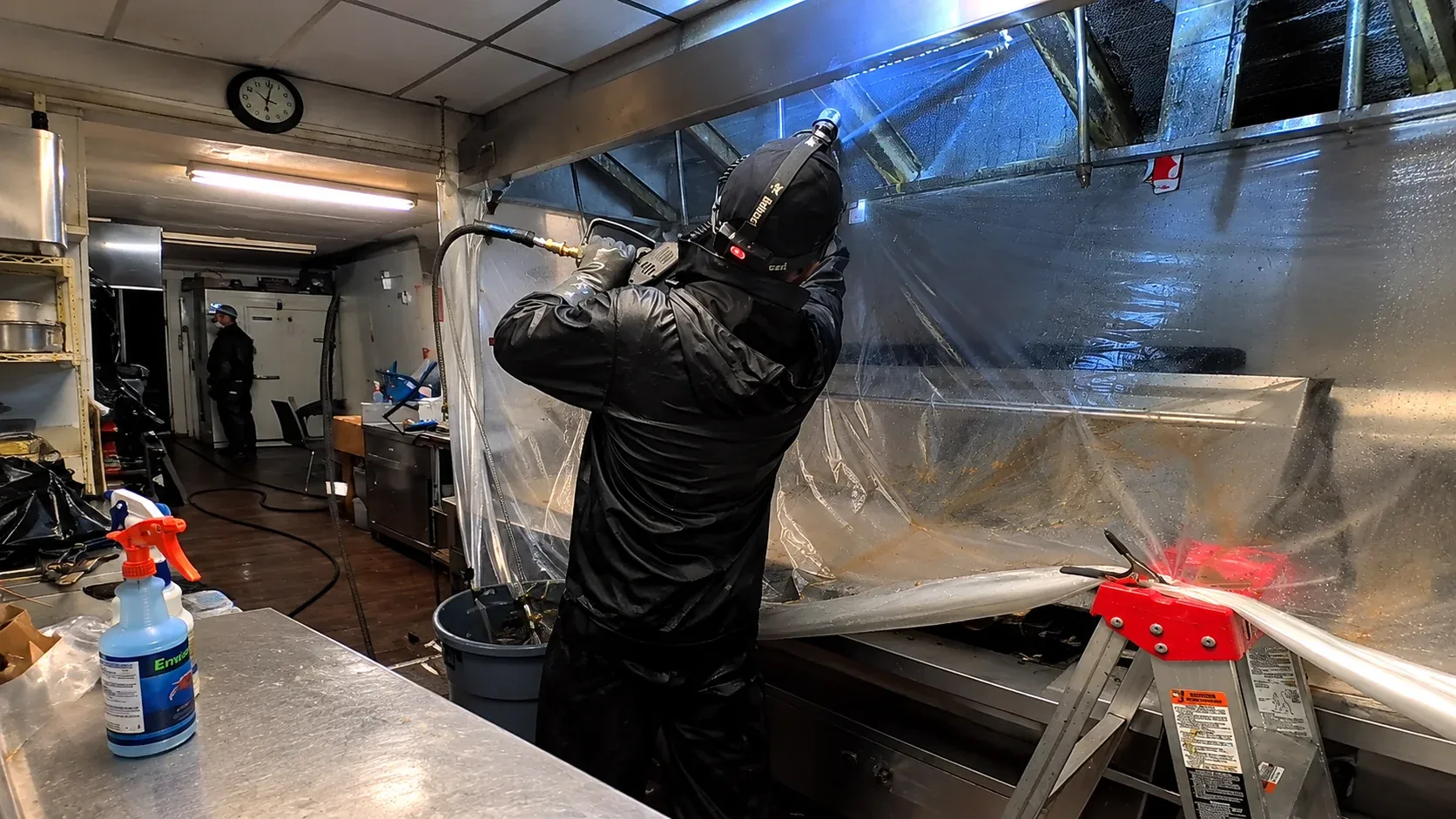
Technician in protective gear pressure-washing the inside of a commercial kitchen exhaust hood

Commercial hood and canopy cleaning is not a single fixed package. The scope depends on the system, its condition, how it can be accessed and what the provider has agreed to do. Before booking, it helps to understand what a normal visit should cover and what may sit outside it.

The usual core of a cleaning visit

For many kitchens, a scheduled hood and canopy cleaning includes the following items when they can be reached safely:

  • Hood and canopy surfaces. Cleaning of accessible interior and exterior surfaces where grease collects, including canopy panels and grease-collecting areas.
  • Grease filters. Removal, cleaning and refitting of accessible filters. Damaged or poorly fitting filters should be pointed out rather than quietly left in place.
  • Accessible fan and exhaust components. Cleaning of fan components and accessible exhaust areas within the confirmed scope.
  • A visual check. A practical look for visible grease, obvious condition issues and access limitations.
  • Service documentation. A record of the work performed, the components covered, any limitations and the recommended next step.

What may be extra or unavailable

Not every part of an exhaust system can be cleaned during a standard visit. The following items may require additional access, equipment, time or a separate trade:

  • Inaccessible ductwork. Concealed or restricted duct sections may not be reachable without opening the system or arranging specialist access.
  • Roof and fan access. Some roof areas, fan housings or safety arrangements may be outside the scope of a standard visit.
  • Fan removal or repair. Mechanical work, motor issues or component replacement may need a qualified trade.
  • Heavy grease or deferred maintenance. A system that has gone a long time without service may need more time and a different plan.
  • After-hours or restricted access. Scheduling outside normal operating patterns can affect availability and cost.
  • Additional systems. Multiple hoods, separate kitchens or extra grease traps may change the quote.

What the inspection does not do

The visual check included with cleaning is not a certification, a fire-safety inspection, an engineering assessment or a guarantee of code compliance. It covers accessible components and visible conditions. Concealed duct interiors and hidden defects may not be visible during the visit.

If a concern needs a qualified trade or a decision from your authority having jurisdiction (AHJ), ask for that next step in writing so it is clear what remains outstanding.

Questions to ask before booking

  • Which components are included, and which are excluded?
  • How will the work area be protected?
  • What access do you need from us, including roof or fan access?
  • Will I receive a written service record?
  • How do you handle inaccessible areas?
  • What is the recommended next-service interval, and why?
  • Are there any optional items that are not part of the base quote?

Why documentation matters

A service record turns a cleaning visit into something you can plan around. It should identify the date, the components cleaned, any limitations, visible observations and the recommended next step. Keep the records together so you can see patterns and answer questions from your team, a landlord or an authority having jurisdiction.

Plan the scope before the visit

The most useful conversation happens before work starts. Confirm what will be cleaned, what will not be cleaned, how access will be handled and what you will receive afterward. That reduces surprises and makes the service easier to compare with another quote.

Grease Shields provides commercial hood and canopy cleaning in St. John's and across the Island of Newfoundland. Learn about the hood cleaning service or request a quote.