What is included in commercial hood and canopy cleaning?
A practical look at the usual scope, optional work and the questions to ask before booking.
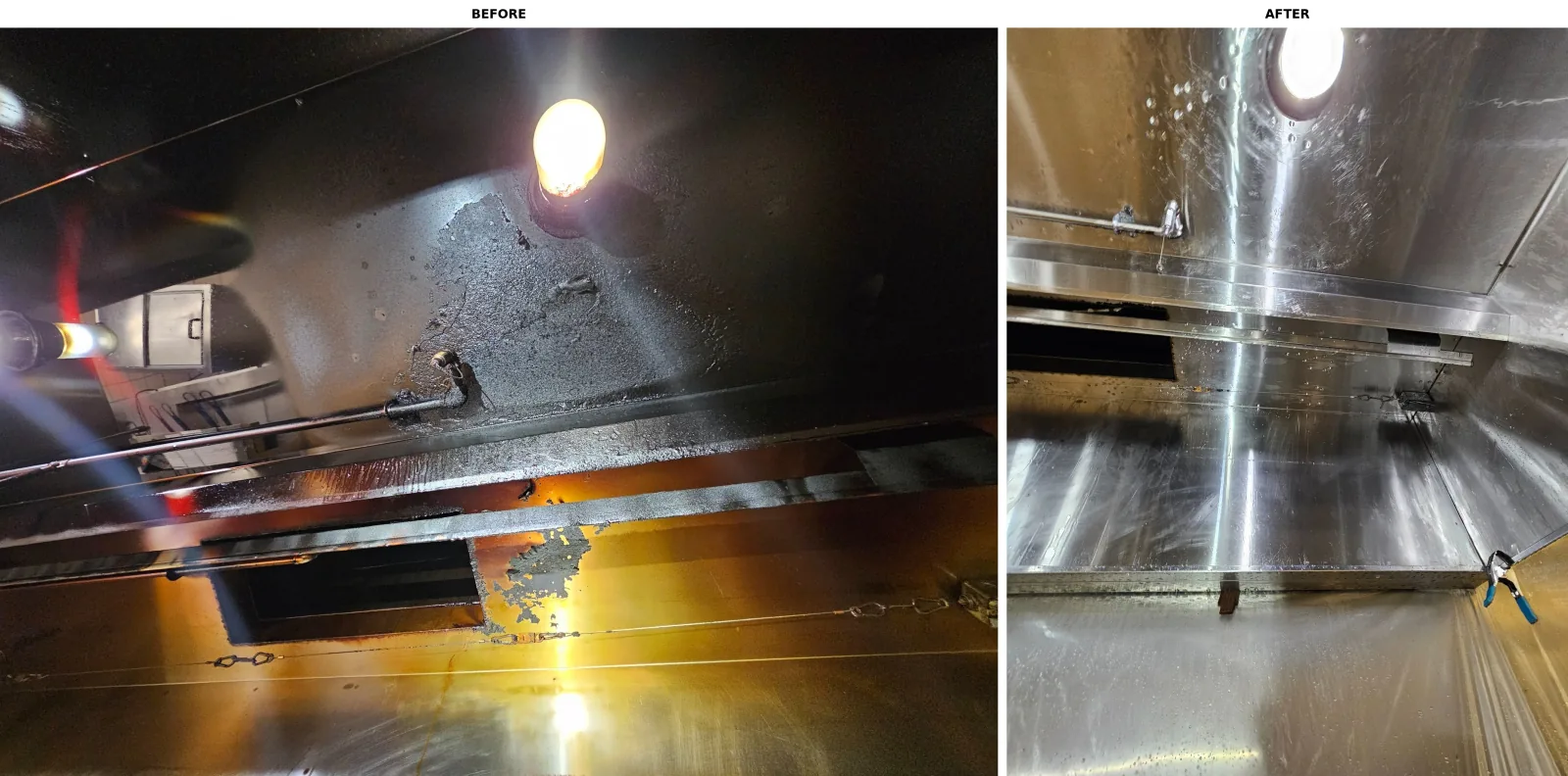
There is no single interval that fits every commercial kitchen. A busy, fry-heavy restaurant and a small café with light cooking can have very different hood-cleaning needs even if their hoods look similar. The right schedule comes from the cooking operation, the condition of the system and the requirements that apply to the premises.
Hood and canopy cleaning removes the grease that collects on surfaces, filters and accessible exhaust components. The faster that grease builds up, the more often the system needs attention. Several factors influence the rate of buildup:
NFPA 96 is a widely referenced standard for commercial cooking ventilation. Its 2024 edition includes a table of cleaning frequencies that many operators use as a starting point:
These intervals are general education, not a statement of Newfoundland law and not a guarantee that the same schedule fits your kitchen. Your AHJ decides what applies to your premises, and the condition of your system may call for a different interval. You can review the NFPA 96 2024 preview PDF for the source text.
A table is not a substitute for a site assessment. A cleaning provider should look at your system, ask about cooking volume and explain what was found before recommending an interval.
None of these signs identifies a specific defect on its own. They are reasons to arrange an assessment and review the schedule.
A cleaning schedule is easier to manage when each visit produces a record. Keep the date, the components cleaned, any access limitations, visible observations and the recommended next step. Over time, those records show whether the interval is working or whether the kitchen's needs have changed.
Request an assessment if you are opening a new kitchen, changing your menu or cooking volume, moving into a new premises, or you cannot find recent service records. If you can see grease buildup or the system has not been serviced in a long time, do not wait for a calendar reminder.
Grease Shields provides commercial hood and canopy cleaning in St. John's and across the Island of Newfoundland. Learn about the hood cleaning service or request a quote.